Geotechnical investigation in Houston forms the critical foundation for safe and enduring construction across Southeast Texas. This category encompasses the systematic assessment of subsurface soil, rock, and groundwater conditions to guide design and mitigate risk. From expansive clays to hidden fault lines, Houston's complex geology demands rigorous inquiry before any shovel breaks ground. A proper investigation not only satisfies regulatory requirements but also prevents costly structural failures, delays, and legal liabilities down the line.
Houston sits atop a geological mosaic shaped by ancient river deltas, coastal processes, and ongoing subsidence. The Beaumont Formation dominates much of the area, presenting stiff to very stiff clays interbedded with silts and sands. These soils exhibit high plasticity and significant shrink-swell potential, a primary driver of foundation distress in the region. Additionally, the city's flat topography belies a network of active growth faults—some crossing major thoroughfares—that can displace structures over time. Understanding these conditions through targeted field and lab work is not optional; it is a fundamental engineering necessity.
Local practice adheres to national standards, chiefly those established by the American Society for Testing and Materials (ASTM). The Texas Board of Professional Engineers and Land Surveyors mandates that all geotechnical work be performed under the responsible charge of a licensed Professional Engineer. Municipalities, including the City of Houston, enforce the International Building Code (IBC) with local amendments, which specify minimum investigation depths, boring counts, and report contents based on structure type and risk category. Compliance with ASTM D1586 for Standard Penetration Tests and ASTM D2487 for soil classification is universally expected.
The scope of projects requiring geotechnical investigation in Houston is vast. High-rise towers in the Galleria area demand deep borings to assess bearing capacity and lateral earth pressures for deep foundations. Residential developers across the Energy Corridor and Kingwood rely on investigations to design slab-on-grade foundations that can tolerate expansive soils. Critical infrastructure—from the widening of Interstate 10 to the expansion of flood control basins—requires sophisticated analysis of liquefaction potential and seepage. A key tool in this effort is the CPT (Cone Penetration Test), which provides a continuous profile of soil behavior, proving invaluable for stratigraphic mapping and settlement analysis in the soft clays near Buffalo Bayou.
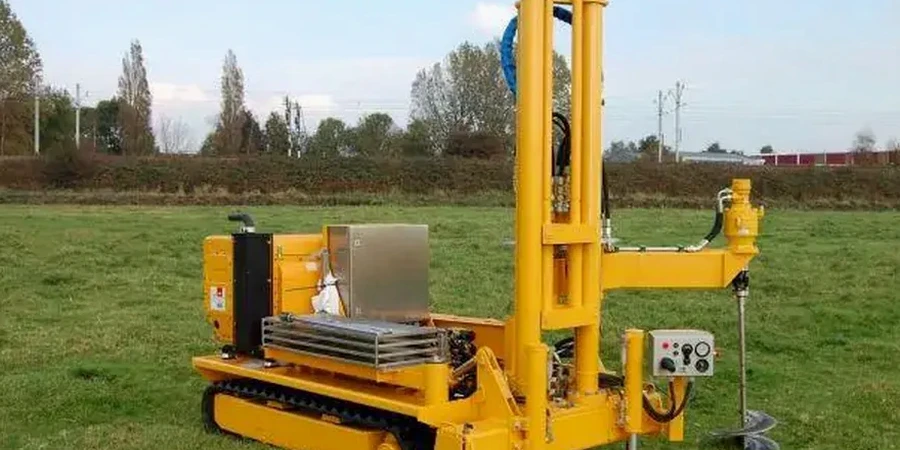
A standard investigation involves drilling exploratory boreholes, collecting soil samples, and performing in-situ tests like the Standard Penetration Test (SPT). Laboratory analysis then determines index properties, shear strength, and consolidation characteristics. The final report provides recommendations for foundation type, allowable bearing capacity, and any necessary ground improvement, all in accordance with ASTM standards and local building code requirements.
Houston's Beaumont Formation clays exhibit high shrink-swell potential, which is a leading cause of foundation distress. An investigation must specifically quantify this behavior through Atterberg limits and suction testing. The resulting data dictates whether a slab-on-grade foundation requires stiffening beams, over-excavation and replacement, or chemical stabilization to mitigate differential movement during the region's wet-dry cycles.
Deep borings, often extending 30 feet or more, are required for structures with deep foundations like drilled piers or driven piles, common in Houston's high-rise construction. They are also necessary when shallow soils are too weak, when assessing regional subsidence effects, or when the project is located near mapped fault traces, to ensure the bearing stratum is competent and unaffected by deep-seated movements.
Investigations are governed by the City of Houston's adopted version of the International Building Code (IBC) and must be stamped by a Texas-licensed Professional Engineer. The Texas Engineering Practice Act sets the standard for professional conduct. Additionally, the Harris County Flood Control District may impose specific requirements for projects within floodplains, focusing on soil stability and seepage control.